Delivered against milestones you sign off
Our software outsourcing services take a defined piece of work and deliver it to an agreed scope and milestones. Every project starts with a 1–3 week discovery, and scope changes go through written change control.
A one to three week discovery fixes the scope before the build starts. It ends with a plan, a price and a written list of what’s out of scope.
The project ends when you accept the final milestone. After that you can keep us on for maintenance or move the work in-house.
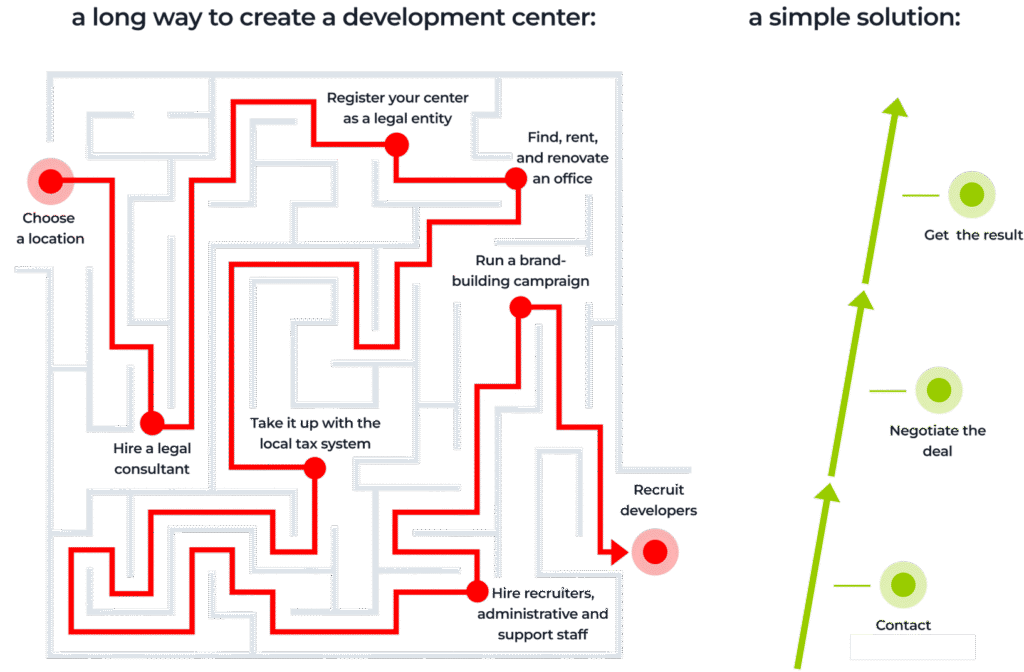
You hand a defined piece of software work to an outside company, which delivers it against an agreed scope, price and timeline. With Dignep that can be a whole product, a module, QA or ongoing maintenance. We own the delivery; you own the decisions.
It depends on scope, stack, integrations and any compliance requirements. The price comes out of a one to three week discovery, once the scope is clear enough to fix. After a free 30-minute call you get a written proposal for that discovery within two working days.
Rates are lower than in the US, Europe or Australia, and our working day overlaps well with India, Australia and Europe. For US clients there's no natural overlap, so we agree a fixed call window before kickoff. Projects cope with the gap better than staff augmentation does, because most of the communication runs through milestones and written updates.
With a project, we manage delivery against a fixed scope and carry the delivery risk. With a dedicated team, the engineers work only for you but you set direction sprint by sprint. Choose a project when the scope is clear; choose a team when it will keep changing.
Code review, automated tests and QA through the whole build, and you accept each milestone. Changes to scope go through a written change request that shows the effect on price and date before anyone starts work on it.
The project ends when you accept the final milestone. You can keep us on for maintenance and support, or take the work in-house.
How does an outsourced project run at Dignep?
Every project starts with a one to three week discovery that fixes scope, price and milestones in writing. We then build in sprints, demo at each milestone, and route every scope change through documented change control. The project ends when you accept the final milestone.
1–3 week discovery
Requirements, architecture, risks and a milestone plan, before any fixed price.
Fixed price or T&M
Agreed in writing after discovery, depending on how settled the scope is.
Ends on acceptance
The project closes when you accept the final milestone. Support is optional.
From brief to accepted milestone
Discovery is where we earn the right to quote a fixed price. Skip it and you get a number nobody can stand behind.
If the idea isn't proven yet, start smaller with a PoC or MVP instead.
Discovery call
Thirty minutes, free. What you need built, by when, and what's already in place.
Scoped proposal (within 2 working days)
What discovery will cover, how long it takes and what it costs.
Discovery (1–3 weeks)
Requirements, architecture, risks and a milestone plan, ending in a fixed price or a time-and-materials estimate and a written out-of-scope list.
Build in milestones
Sprints with demos. You accept each milestone before the next starts. Scope changes go through written change requests.
Acceptance and handover
The project ends when you accept the final milestone. Keep us on for maintenance, or take it in-house.
Fixed price or time and materials?
Both work. The choice depends on how settled the requirements are after discovery.
| Fixed price | Time and materials | |
|---|---|---|
| Use it when | Requirements, timeline and deliverables are clear after discovery | Requirements will move as you learn from users |
| You pay | An agreed price, in milestone payments | For the hours worked, invoiced monthly |
| Changes | Through written change requests with a new price and date | Re-prioritised in each sprint review |
| Risk sits with | Us, for delivering the agreed scope | Shared, with you controlling the scope |
Is a project the right model?
| Model | Team size | Start time | Pick it when |
|---|---|---|---|
| Staff augmentation | 1–5 engineers | 5–10 working days | You already have a team and a lead, and need more hands or one skill you lack. |
| Dedicated team | 3–15+ engineers | 2–4 weeks | A product that will keep changing for a year or more, and you want the same people on it. |
| Project-based | Scoped to the work | 1–3 week discovery | The scope is clear enough to fix, and you want us accountable for delivery against milestones. |
| PoC / MVP | Small squad | 4–8 week build | You need to prove an idea works, or put a first version in front of users, before committing more. |
Pricing is scoped and quoted after a free 30-minute discovery call, with a written proposal within two working days. Dedicated teams and staff augmentation run on 30 days' written notice; projects end on milestone acceptance.
Working hours across time zones
Our working day is 09:00–18:00 Nepal Time (UTC+5:45, no daylight saving). This is how it lines up with yours:
| Your region | Shared working hours |
|---|---|
| India | Almost the whole day (IST is 15 minutes behind) |
| Australia (Sydney) | The Sydney afternoon, about 3–4 hours |
| Central Europe | The European morning, about 4 hours |
| UK | About 3 hours |
| US East / West | No natural overlap. We agree a fixed daily call window before kickoff, usually by moving the team lead's working day. |
When this isn't the right fit
- You can't describe the scope yet. A fixed price would be a guess; start with a PoC or a dedicated team.
- You want to direct engineers day to day. Staff augmentation gives you that control.
- The job is a few days of fixes. Our projects start with a discovery phase, which is overkill for that; a freelancer is probably better value.
Real-Time Monitoring System for the Town Development Fund
A project we delivered from requirements discovery and data modelling through to deployment and user training:
The Town Development Fund finances urban infrastructure in municipalities across Nepal. We built RTMS, the web system it uses to track the financial and physical progress of those projects in one dashboard, replacing spreadsheets and late manual reports. React and Next.js, a Go and Node.js API layer, PostgreSQL.
Further reading
Tell us what you need built. Start with a free 30-minute call, and we send a scoped proposal within two working days.