Complying with ISO/IEC 20000-1:2018
Complying with ISO/IEC 20000-1:2018 is a strategic investment that drives quality, consistency, and trust in IT service delivery. This globally recognized standard empowers organizations to improve operational efficiency, align IT processes with business objectives, and achieve continual improvement in service management practices.
What is ISO/IEC 20000-1:2018?
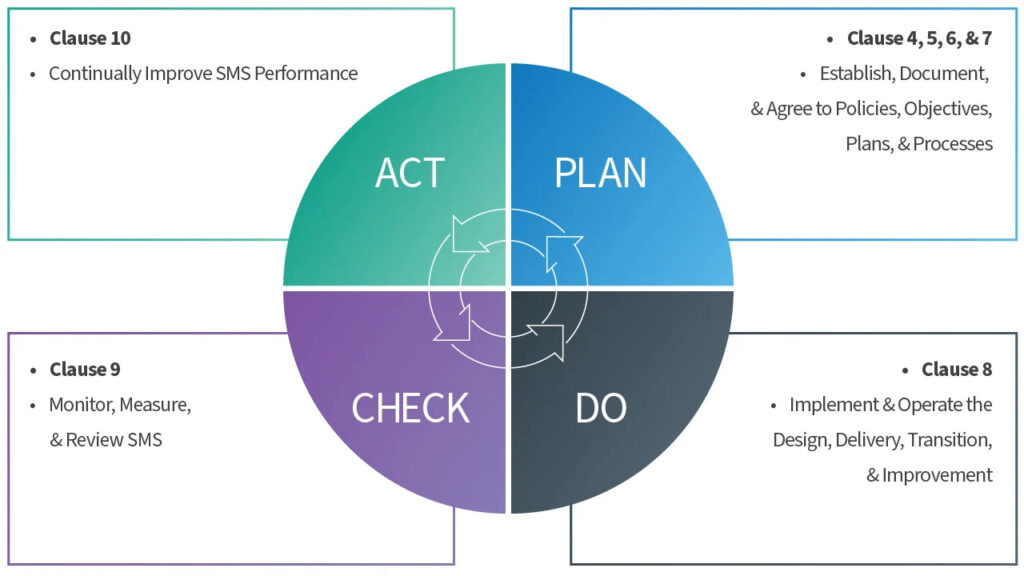
ISO/IEC 20000-1:2018 is the international standard for establishing, implementing, maintaining, and improving an organization’s IT Service Management System (SMS). It defines the framework for managing IT services throughout their lifecycle covering planning, design, transition, delivery, and continual improvement.
The 2018 revision aligns closely with modern IT practices, integrating agile methodologies, cloud computing, and multi-supplier management. It ensures that IT services consistently meet business and customer requirements while allowing flexibility in how organizations design their service management systems.
The standard applies to enterprises of all sizes across sectors and helps them demonstrate capability, reliability, and value in IT service delivery. The ISO/IEC 20000-1 framework is designed for both internal IT departments and managed service providers seeking global recognition.
Benefits of ISO/IEC 20000-1:2018 Certification
Implementing and certifying against ISO/IEC 20000-1:2018 yields multiple technical, operational, and strategic benefits.
Improvement in Service Quality
ISO/IEC 20000-1 standardizes IT service processes to ensure consistency, reliability, and measurable quality improvements across operations. This results in reduced service outages, improved incident response times, and proactive issue prevention.
Competitive Advantage and Market Credibility
Certification under ISO/IEC 20000-1:2018 instantly boosts credibility with clients and partners by demonstrating adherence to internationally recognized best practices. Many organizations use it as a differentiator in competitive tenders and government contracts, often giving certified companies preferential advantage.
Enhanced Customer Satisfaction
By aligning IT services with customer expectations and continual improvement principles, certified organizations are better equipped to deliver value driven, reliable solutions fostering deeper trust and long-term client relationships.
Operational Efficiency and Cost Reduction
Through structured processes and performance metrics, the standard minimizes duplication, waste, and reactive spending on service outages. Organizations see measurable savings due to streamlined operations and fewer emergency interventions.
Risk Management and Business Continuity
The standard encourages robust risk assessment and service continuity management, enabling organizations to anticipate and mitigate potential service disruptions effectively. This proactive approach safeguards both reputation and revenue streams.
Governance and Compliance
ISO/IEC 20000-1 integrates governance with performance creating traceability, accountability, and oversight over IT service management activities. It also dovetails with related standards such as ISO/IEC 27001 (Information Security) and ISO 9001 (Quality Management).
The Role of IT in Preparing for ISO/IEC 20000-1:2018 Compliance
IT departments play a central role in achieving ISO 20000-1 compliance. Successful implementation requires harmonizing technology tools, data systems, and governance frameworks under the SMS model.
Implementing ITSM Tools and Technology
Organizations often deploy IT service management (ITSM) platforms such as ticketing, incident, problem, and change management software to collect, manage, and report compliance data. These tools ensure traceable and auditable processes during certification audits.
Process Standardization and Integration
IT teams must align service design and delivery processes with ISO/IEC 20000-1:2018 clauses. This includes integrating monitoring tools for performance indicators (KPIs), service level management dashboards, and risk registers.
Continuous Training and Awareness
IT staff must undergo continual training to understand their roles in service management and compliance. Awareness programs enhance adoption of ITSM principles, foster teamwork, and promote continuous improvement.
Internal Auditing and Review Cycles
Before certification, IT departments conduct internal audits and management reviews to identify nonconformities, measure improvement performance, and prepare corrective actions ahead of the external ISO audit.
How Certification is Granted
To obtain ISO/IEC 20000-1 certification, an organization undergoes a two-stage audit by an accredited certification body.
- Stage 1 Audit: Documentation review ensuring policies and processes meet standard requirements.
- Stage 2 Audit: Operational assessment evaluating the actual implementation and effectiveness of the SMS.
Post-certification, periodic surveillance and recertification audits are conducted to ensure continuous alignment with ISO/IEC 20000-1 standards.
The Continued Relevance of ISO/IEC 20000-1:2018
In today’s technology driven environment, ISO/IEC 20000-1:2018 serves as a benchmark for IT service reliability, customer trust, and operational excellence. From cloud providers to financial firms and public administration agencies, compliance with this standard provides a measurable advantage in maintaining quality IT service delivery.
The 2018 edition emphasizes flexibility, vendor integration, and digital transformation readiness, making it fit for emerging IT service models such as multi-cloud management, remote workplaces, and automated service delivery.
Conclusion
Complying with ISO/IEC 20000-1:2018 is not merely about certification it is about cultivating a mature, efficient, and customer aligned IT service culture. By embedding its best practices, organizations strengthen governance, optimize resources, enhance customer satisfaction, and ensure that every IT service adds measurable business value.
ISO/IEC 20000-1:2018 remains the most comprehensive and globally recognized framework for IT service management excellence helping forward thinking organizations stand out in a competitive digital market. Learn more about ISO/IEC 20000-1:2018 from the official ISO website at https://www.iso.org/standard/70636.html
Related from Dignep: Explore the Certifyi AI GRC platform and our SayCure SOC platform case study.